

Human and Artificial Intelligence
How to think clearly in a world shaped by AI output, automated persuasion, and synthetic information.
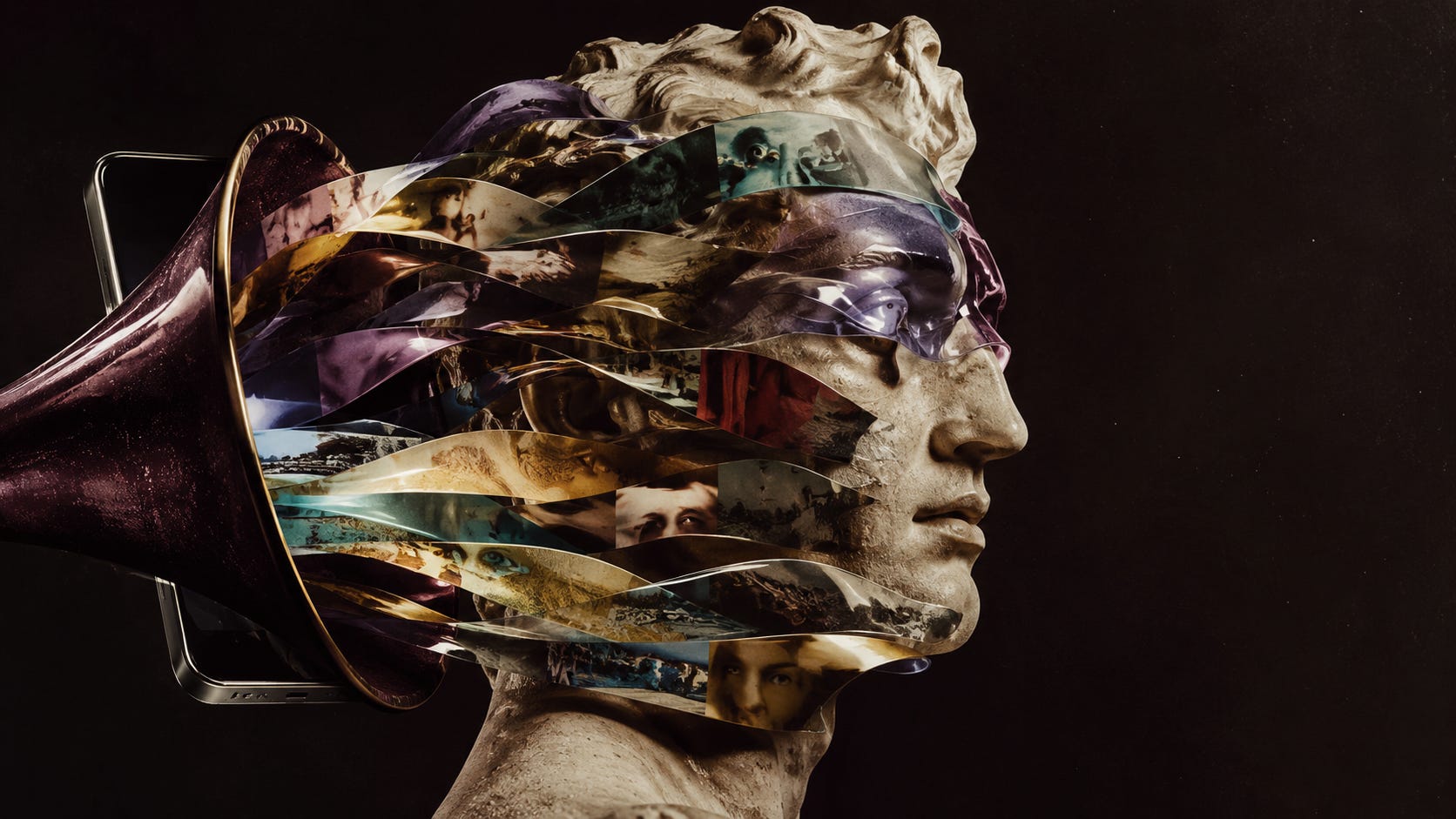
Some may be under the impression that artificial intelligence will somehow liberate us from the need for better thinking. That we can delegate our thinking and judgement to the superintelligence without consequences. Nothing is further from the truth. If anything, the rise of AI makes better human thinking more urgent.
AI can help people learn, write, research, build, summarize, explore, and create. It can also produce confident nonsense, launder assumptions, hide uncertainty, automate persuasion, intensify propaganda, and generate convincing answers that collapse under inspection. And that’s assuming the models are not simply hard-coded to deceive, nudge, propagandize or obscure information.
Artificial intelligence is useful as a practical tool, no doubt, but the central question is whether humans are intellectually prepared to train and use AI in function of what is good and true.
What you will find here
Posts in this section will help you:
Assess AI output for truth, bias, and hidden assumptions
Detect machine-generated nonsense
Understand automated persuasion and synthetic media
Use AI without outsourcing your judgment
Think clearly about intelligence, agency, control, and alignment
Recognize when AI is amplifying bad human thinking
Develop better habits for human-machine reasoning
Core questions
Human and AI thinking begins with questions like:
Is this answer true?
What assumptions is the model making?
What sources would verify this?
What uncertainty is being hidden?
Is this helping me think or replacing my thinking?
Am I using AI as a tool, a shortcut, or an authority?
Who benefits if this kind of output shapes my beliefs?
What happens when weak human reasoning trains powerful machines?
AI raises the stakes of intellectual life.
If human thought is confused, manipulated, and detached from reality, then the systems built from human output will reflect that confusion at scale.
The future needs better machines, but it needs better humans first.